
How to design a virtual childcare centre tour
Capture the magic of your early learning service with a high-converting virtual tour. Learn how to showcase your NQF compliance and unique play spaces through immersive digital experiences.
In a nutshell
A virtual tour is a 24/7 salesperson for your early learning centre. By combining high-quality 360-degree imagery with a narrative that highlights your educational philosophy and NQF standards, you can secure more enrolments and build trust before a parent even steps through your front door.
In the modern Australian childcare landscape, parents are often time-poor and tech-savvy. They are no longer just looking for a convenient location; they are searching for a community that aligns with their values and offers the best developmental outcomes for their children. When a family discovers your service online, the first thing they want to see is where their child will be spending 8 to 10 hours a day.
Learning how to design a virtual childcare centre tour isn't just about showing off your new coat of paint or your sandpit. It is about creating an emotional connection. It bridges the gap between a Google search and a physical visit, allowing parents to visualise their child exploring your play spaces while they are sitting on the couch after work.
The strategic value of a virtual tour for enrolments
A virtual tour serves as a powerful filter in your enrolment funnel. It allows families to self-qualify, meaning the people who eventually book a physical walkthrough are already highly motivated and likely to sign an enrolment form. This efficiency is vital for centre managers who are balancing administrative tasks with pedagogical leadership.
- Increased transparency: Showing your full environment builds immediate trust with parents concerned about safety and cleanliness.
- Accessibility: 24/7 access means you can accommodate shift-working parents which is a critical part of childcare marketing strategies in metropolitan Australia.
- SEO benefits: Google loves immersive content. A well-integrated tour can improve your on-page dwell time, which signals to search engines that your site is valuable.
Choosing the right format for your early learning centre
Not all virtual tours are created equal. Depending on your budget and the complexity of your building, you might choose one of three primary formats. Each has pros and cons regarding user experience and technical implementation.
- Video Walkthroughs: A cinematic, guided journey narrated by the Nominated Supervisor. This is great for storytelling but lacks interactivity.
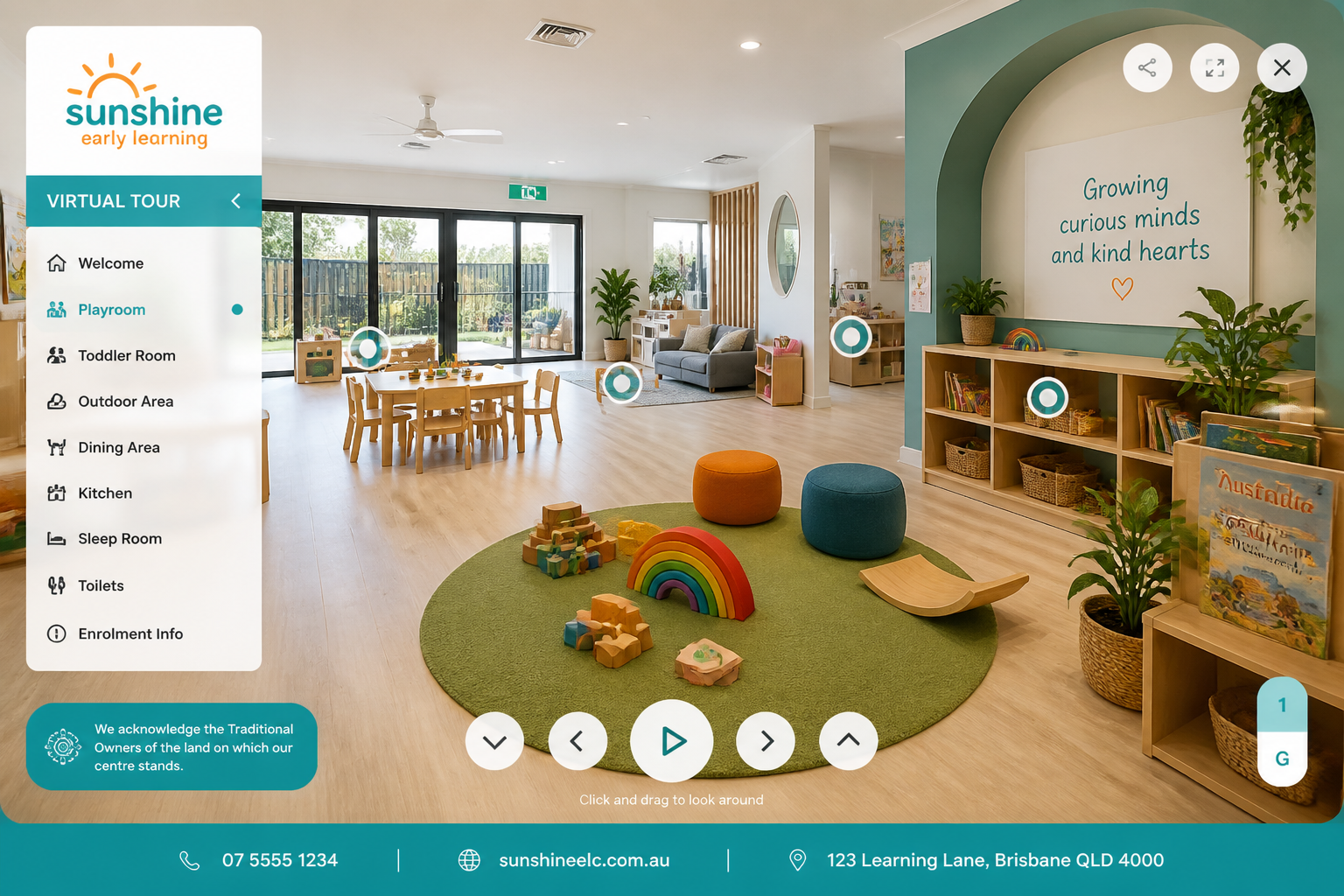
- 360-Degree Interactive Tours: Using platforms like Matterport, these allow parents to click through rooms at their own pace. This is the gold standard for childcare websites today.
- Live Virtual Tours: Zoom or FaceTime tours conducted in real-time. These are highly personal but require dedicated staff time for every inquiry.
For most long day care services in Australia, the 360-degree interactive tour offers the best return on investment. It provides an immersive experience without requiring constant staff intervention. It also allows you to embed "hotspots" that explain specific features, such as your sun-safety policies or your menu curated by an in-house chef.
Staging your centre for the camera
Before you bring in a photographer or start filming, your centre must look its absolute best. However, it shouldn't look sterile. Parents want to see a "living" environment that meets ACECQA standards while appearing warm and inviting. High-quality visuals are a cornerstone of effective SEO for childcare, as they keep users engaged longer.
Think about the following areas during your preparation:
- Natural light: Schedule your shoot for a day with bright, soft light. Open all blinds and ensure every corner is well-lit.
- Resource placement: Set up "invitations to play" on tables. A half-finished wooden block tower or a tastefully arranged art station looks much better than an empty room.
- Safety and Compliance: Ensure all high-vis vests are tucked away, no chemicals are visible, and your sleep rooms or cot rooms are perfectly made up according to SIDS guidelines.
Highlighting the National Quality Framework (NQF)
In Australia, your virtual tour is a brilliant opportunity to subtly demonstrate your commitment to the NQF. You don't need to quote the legislation, but you should show it in action. Use text overlays or hotspots to draw attention to specific Quality Areas.
For example, in the outdoor area, a hotspot could mention how your natural play spaces support Quality Area 3 (Physical Environment). In the kitchen area, you might mention your commitment to Quality Area 2 (Children’s Health and Safety) by highlighting your allergy-aware meal preparation zones. This level of detail reassures parents that your centre is professional and compliant.
Want this done for you?
Book a free Business Review Session and we'll map out exactly how to apply this to your setting.
Book my session →Integrating storytelling and narration
A tour of a building is just a tour, but a tour of a community is an experience. If you are using a video format, have your centre manager or educational leader narrate the journey. They should speak to the "why" behind your rooms. Instead of saying "This is the toddler room," they might say, "In our toddler room, we focus on developing emerging independence through sensory play and educator-led exploration."
If you are using an interactive 360 tour, use the text descriptions to paint a picture. Describe the smells of the garden, the sound of the morning circle, and the philosophy behind your curriculum. This helps parents feel the atmosphere of the centre, which is often the deciding factor in childcare choice.
Technical considerations and website placement
Once you have your media files, where they live on your site matters. You want to ensure the tour doesn't slow down your website loading speed, as this can harm your childcare business growth by frustrating mobile users. Always use a fast, dedicated hosting service for video or 360-degree embeds.
- Above the fold: Don't bury your virtual tour on a sub-page. Feature a "Take a Virtual Tour" button prominently on your homepage.
- Mobile responsiveness: Ensure the interactive elements work perfectly on smartphones. Most parents will first view your tour while on a mobile device.
- Call to Action (CTA): Every tour should end with a clear instruction. Usually, this is "Book a physical tour" or "Check availability for your child."
Remember to keep your tour updated. If you undergo a major renovation or change your outdoor play equipment, your virtual tour needs to reflect that. An outdated tour can lead to a sense of disappointment when a parent finally visits in person.
Measuring the success of your virtual tour
How do you know if your investment in a virtual tour is paying off? You need to track the right metrics in your Google Analytics or CRM. Look for things like the number of clicks on the tour link, the average time spent on the page, and the conversion rate of users who viewed the tour versus those who didn't.
You can also ask parents during the physical tour or enrolment meeting: "Did you have a chance to see our virtual tour online?" Their feedback will be invaluable for future updates. Often, you will find that parents spend several minutes exploring the rooms, which dramatically reduces the amount of basic questioning you have to do during the in-person visit.
FAQs
Is a professional photographer necessary for a virtual tour?
While modern smartphones have great cameras, a professional with 360-degree equipment and lighting expertise will produce a significantly more polished result. In a competitive market, the quality of your virtual tour reflects the quality of your care. Professional equipment also handles large spaces and natural light much better than a phone.
How much does a virtual childcare centre tour usually cost?
Costs vary based on the size of your service and the technology used. A simple video walkthrough might cost a few hundred dollars, while a comprehensive interactive 360-degree Matterport tour for a 90-place centre may range from $1,500 to $4,000 AUD. Consider this a long-term asset that reduces marketing costs over time.
Should I include children in the virtual tour footage?
For privacy and compliance reasons, it is usually best to film the tour while the centre is empty or during a weekend. This avoids the need for complex photo release forms and ensures you don't accidentally reveal the identities of children in your care. An empty, clean, and well-staged centre often looks more professional on camera.
How do I make the tour accessible for all parents?
Ensure your tour platform supports screen readers and provides text descriptions for visual elements. If you use a video tour, always include captions for the Hearing Impaired and consider providing a transcript. Accessibility is not only inclusive but also helps with your overall search engine rankings.
Will a virtual tour replace the need for physical tours?
Unlikely. Most parents still want to meet the educators and feel the "vibe" of the centre in person before enrolling. However, the virtual tour acts as a powerful first step, ensuring that the families who do visit are genuinely interested and already familiar with your layout and offering.
Designing an effective virtual tour is a journey of showcasing your centre's heart and soul through a digital lens. By focusing on quality, storytelling, and compliance, you create a marketing tool that works for you every single day. If you're ready to take your digital presence to the next level and fill your waitlist, book a session with our team today.