What Every Childcare Centre Website Needs
A high-performing childcare website is more than just a digital brochure; it is your 24/7 enrolment officer. Learn the essential features that convert browsing parents into booked tours.
In a nutshell
A successful childcare website must balance emotional connection with functional efficiency. By focusing on mobile responsiveness, clear calls to action, and transparent information regarding the NQF and CCS, you can turn casual visitors into loyal families.
In the competitive Australian early learning landscape, your website is often the first interaction a family has with your brand. Whether you run a single long day care centre in Melbourne or a group of services across Queensland, your digital presence plays a critical role in your occupancy rates.
The modern parent is time-poor and information-hungry. They aren't just looking for a place to leave their children; they are looking for a community that aligns with their values and simplifies their complex lives. If your site doesn't deliver immediate value, they will move on to the next provider in seconds.
1. A Fast, Mobile-First User Experience
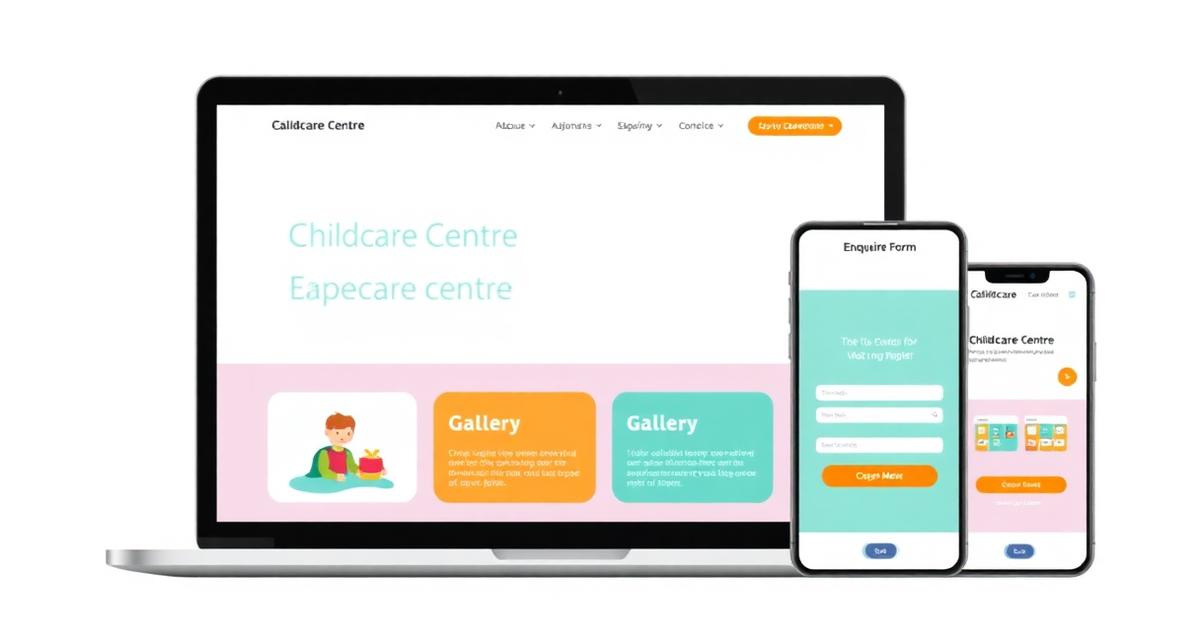
Most parents search for childcare on their smartphones while commuting, during a lunch break, or in the evening. If your website takes more than three seconds to load or looks broken on a mobile screen, you are effectively closing your doors to new enquiries.
- Ensure images are compressed to keep load times under two seconds.
- Use large, finger-friendly buttons for navigation and calls to action.
- Prioritise a clean layout that minimises scrolling for essential contact details.
Optimising your technical performance is a core part of childcare SEO, as Google prioritises fast, mobile-responsive sites in local search results. A clunky site suggests a lack of attention to detail, which is the last impression you want to give to prospective parents.
2. Prominent Calls to Action (CTAs)
The primary goal of your website is to move a parent to the next stage of the enrolment journey. This is usually booking a tour or joining a waitlist. What every childcare centre website needs is a clear, unmistakable path for the user to follow.
Generic "Contact Us" pages are no longer enough. You need specific, high-intent buttons placed strategically across every page of your site.
- Book a Tour: Link this directly to a calendar booking tool to reduce friction.
- Enquire Now: Use a short, simple form to capture lead data.
- Check Availability: A great way to start a conversation about specific age groups.
By implementing a high-converting childcare website, you ensure that every marketing dollar spent on driving traffic actually results in a tangible lead for your centre manager to follow up.
3. High-Quality, Authentic Visuals
Stock photos of perfectly manicured children in clinical-looking rooms do not build trust. Australian parents want to see the real everyday magic of your centre. They want to see your actual educators, your outdoor play spaces, and the diverse community of children you serve.
Visual storytelling should reflect the Child Safe Standards and demonstrate a warm, inviting atmosphere. Professional photography of your mud kitchen, vegetable garden, or cozy reading nook conveys your educational philosophy more effectively than a thousand words of text.
Want this done for you?
Book a free Business Review Session and we'll map out exactly how to apply this to your setting.
Book my session →4. Transparent Information on CCS and Fees
The Child Care Subsidy (CCS) is a significant factor in a family's decision-making process. While you may not want to list every daily rate due to fluctuations, providing a guide or a link to a subsidy estimator is incredibly helpful.
Being transparent about what is included in your daily fee—such as nappies, linen, and nutritious meals prepared by an on-site chef—helps justify your price point. It positions your service as a value-driven choice rather than just a cost.
- Include a section explaining how the CCS works for new parents.
- List your inclusions clearly (e.g., SunSmart hats, extracurricular programs, or incursions).
- Provide a link to an enquiry calculator or a third-party subsidy tool.
5. Evidence of Quality and Compliance
In Australia, the National Quality Framework (NQF) and ACECQA ratings are vital trust signals. Displaying your rating—especially if you are "Exceeded" or "Meeting" the National Quality Standard—can be a major differentiator.
Social proof through parent testimonials is equally powerful. A dedicated section for reviews allow prospective families to see that other parents in their suburb trust you with their children's safety and development.
- Embed Google Reviews directly onto your homepage for real-time social proof.
- Highlight awards or community recognitions your staff have received.
- Showcase your latest NQS rating prominently in the footer or on the 'About Us' page.
6. Staff Profiles and Educational Philosophy
Parents aren't just buying a space; they are choosing the people who will help raise their children. Introducing your Centre Manager and Lead Educators on the website humanises your organisation and builds rapport before the first handshake.
When defining your educational philosophy, avoid industry jargon. Instead, explain how your approach—whether it’s Montessori, Reggio Emilia, or a play-based curriculum—benefits the child's readiness for school and social emotional development. This is a key pillar for high-performing childcare marketing strategies.
7. Location-Specific Information
Most parents search for childcare within a 5-10 kilometre radius of their home or workplace. Your website must be deeply rooted in its local context. This means more than just listing an address; it means showing you are part of the local community.
Include an interactive Google Map, photos of the local park where you take excursions, and mentions of nearby primary schools you have transition-to-school programs with. This assists with local SEO and helps parents visualise how your centre fits into their daily routine.
8. Engaging and Informative Blog Content
A blog is your opportunity to demonstrate your expertise in early childhood education. By providing helpful advice on topics like school readiness, managing separation anxiety, or healthy lunchbox ideas, you provide value beyond just care services.
Consistent content also signals to search engines that your site is active and relevant. It allows you to target long-tail keywords that parents are searching for, helping to drive organic traffic to your site without relying solely on paid advertising.
FAQs
What is the most important page on a childcare website?
While the homepage is the front door, the 'Book a Tour' or 'Enrol' page is the most critical for conversions. It must be simple, friction-free, and clearly state what happens next. A parent should never have to hunt for a way to contact you or visit your centre.
Should I list my daily fees on the website?
While some owners prefer to discuss fees during a tour, transparency is increasingly valued by Millennial and Gen Z parents. If you don't list exact prices, provide a 'starting from' rate or a comprehensive list of what the fee includes to demonstrate value and build immediate trust.
How often should I update my centre's website?
Core information like staff bios and contact details should be checked monthly. From a technical and SEO standpoint, adding new blog content or updating your gallery once a month keeps the site fresh for both parents and search engines, ensuring you remain competitive in local searches.
Do I need a waitlist form on my website?
Yes. Even if your centre is currently at full capacity, a digital waitlist form is an essential tool for future planning. It helps you build a database of warm leads that you can nurture via email until a spot becomes available, ensuring high occupancy long-term.
How do I make my website stand out from competitors?
Focus on your USP (Unique Selling Proposition). Whether it is your bush-kinder program, your long-standing educator team, or your state-of-the-art STEM room, lead with what makes you different. Authentic video tours and genuine parent stories are far more memorable than generic stock photography.
Building a high-performing digital presence is a journey, not a one-off task. By focusing on the needs of your local families and providing a seamless user experience, you can ensure your centre remains the first choice for parents in your community. To see how your current website stacks up, book a session with us today.