
Nursery Website Design Checklist for Higher Enrolments
A professional website is your digital front door. Use this nursery website design checklist to ensure your setting converts browsing parents into booked tours and registrations.
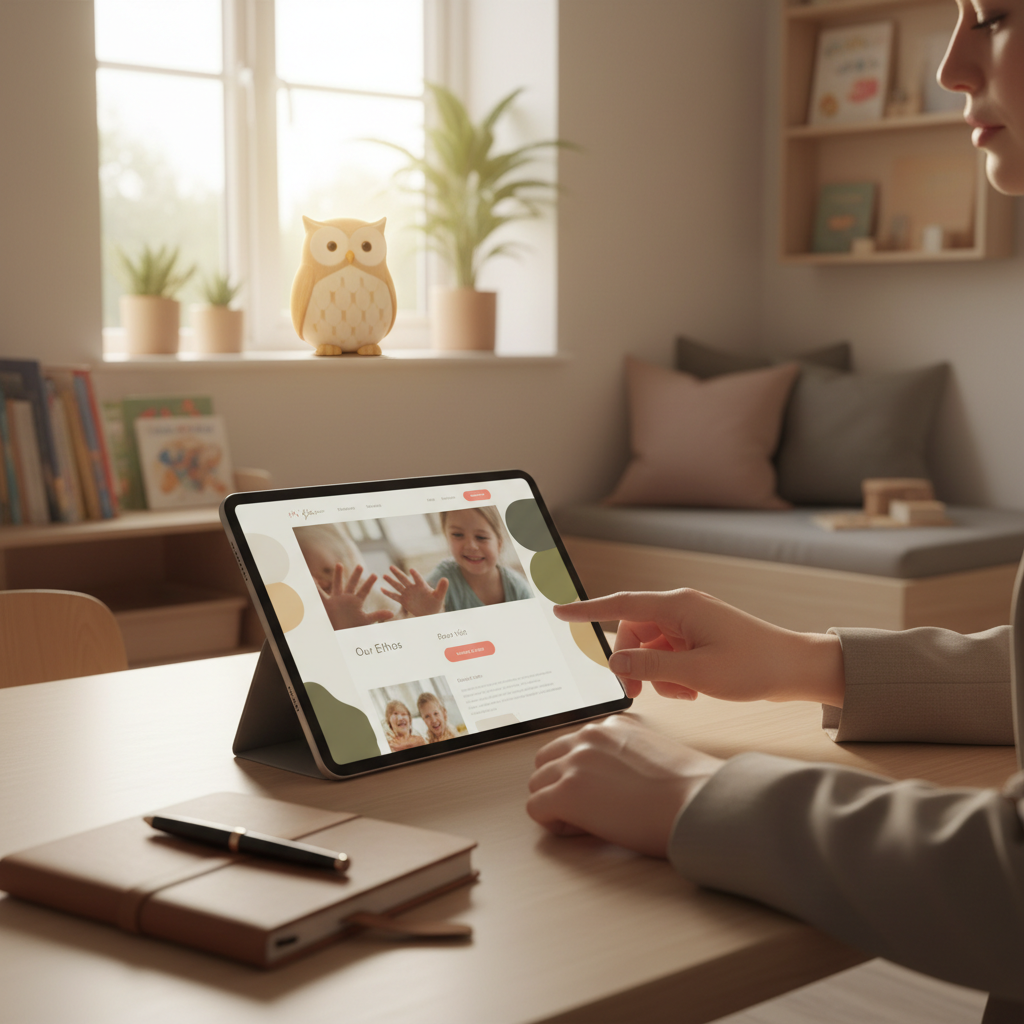
In a nutshell
Your nursery website must balance trust-building visuals with functional tools like enquiry forms and Ofsted links. This checklist ensures your site acts as a 24/7 salesperson to increase your occupancy rates effectively.
For most parents in the UK, the journey to choosing a childcare setting begins on Google. If your digital presence feels outdated or difficult to navigate, prospective families will likely move on to a competitor with a smoother experience. A high-converting website is no longer a luxury; it is the backbone of your childcare business growth.
Building a site that reflects the warmth of your setting while meeting modern technical standards requires a strategic approach. This nursery website design checklist covers everything from mobile responsiveness to the specific trust signals UK parents look for before booking a tour.
1. Mobile-First User Experience
The majority of your traffic comes from busy parents scrolling on their phones during a commute or a quick lunch break. If your site takes too long to load or requires pinching and zooming, you will lose them instantly.
- Responsive Design: Ensure the layout adjusts seamlessly across smartphones, tablets, and desktops.
- Fast Loading Times: Optimise images of your playrooms and outdoor spaces so they don't slow down the page.
- Thumb-Friendly Navigation: Make sure buttons for 'Book a Visit' or 'Contact Us' are easy to tap on small screens.
2. Essential Trust Signals for UK Parents
In the childcare sector, trust is your most valuable currency. Your website must communicate safety, quality, and reliability immediately upon landing on the homepage. High-quality nursery website design prioritises these elements to reduce parental anxiety.
- Ofsted Rating: Display your latest rating prominently. If you are 'Outstanding' or 'Good', shout about it with the official logo.
- Safeguarding Policies: Provide a clear link to your safeguarding and whistleblowing policies to demonstrate compliance.
- Staff Profiles: Include photos and qualifications (e.g., Level 3 Early Years Educator) of your team to humanise the setting.
- Testimonials: Feature recent quotes from current parents mentioning specific benefits like the settling-in process.
3. Clear Information on Fees and Funded Hours
Transparency regarding costs is one of the top requirements for parents. With the expansion of government-funded childcare hours in the UK, your site needs to clearly explain how you facilitate these schemes.
Avoid hiding your fees behind a 'request a brochure' wall. While you don't need to list every granular cost, providing a starting range or a clear PDF download helps qualify leads before they contact you.
- Funding Guide: Explain how 15 and 30-hour funded places work at your specific nursery.
- Consumables Charges: Be clear about any additional costs for meals, nappies, or trips to avoid future friction.
- Tax-Free Childcare: Confirm that you accept Tax-Free Childcare payments to help parents save on their bills.
Want this done for you?
Book a free Business Review Session and we'll map out exactly how to apply this to your setting.
Book my session →4. High-Quality Visual Storytelling
Stock photos of generic smiling children are easy to spot and often feel insincere. Authentic photography of your actual setting, staff, and equipment builds a much stronger connection with prospective families.
Ensure your images showcase the daycare marketing strengths of your setting, such as a well-resourced Forest School area or a calm sensory room. Video tours are also becoming an essential component of the nursery website design checklist, allowing parents to visualise their child in the space.
5. Search Engine Optimisation (SEO) Essentials
A beautiful website is useless if no one can find it. Your site needs to be built with local SEO in mind so that you appear when parents search for "nurseries near me" or "pre-schools in [Your Town]".
- Keyword Integration: Use your primary keywords naturally in headings and meta descriptions.
- Google Business Profile: Ensure your website links correctly to your Google map listing.
- Local Content: Mention local landmarks or community events to reinforce your presence in the area.
For more advanced strategies, consider how childcare SEO can help you outrank larger nursery chains in your local authority area.
6. Conversion-Focused Calls to Action (CTAs)
The ultimate goal of your website is to get parents through your physical doors. Every page should guide the user toward a specific action without being overly aggressive.
- Primary CTA: 'Book a Personal Tour' or 'Register Interest' should be in a contrasting colour in the top right corner.
- Secondary CTA: 'Download our Prospectus' is perfect for parents who are still in the early research phase.
- Live Chat or WhatsApp: Many modern parents prefer a quick message over a phone call; integrating a simple chat tool can significantly increase enquiry rates.
7. Parent Communication and Portals
While your website is a recruitment tool, it also serves your existing community. A dedicated parent area can streamline operations and improve retention. Link to your chosen management software to make life easier for your admin team.
Providing easy access to menus, term dates, and newsletters shows prospective parents that you are organised and communicative. This level of professionalism is a key part of childcare business growth, as it reduces administrative churn and improves parent satisfaction.
FAQs
Why is a mobile-responsive design so important for nurseries?
Most parents search for childcare during 'micro-moments' throughout the day on their phones. If your site isn't mobile-friendly, it creates a frustrating experience that reflects poorly on your setting's attention to detail, leading parents to choose a competitor with a more accessible site.
Should I put my full fee structure on my website?
While some owners fear competitors seeing their prices, transparency builds immediate trust with parents. You don't need a full spreadsheet, but providing clear 'starting from' rates or a downloadable fee sheet helps qualify enquiries and saves your manager time answering basic pricing questions.
How often should I update my nursery website?
You should review your content at least once a term. Ensure your Ofsted report is current, staff photos are up to date, and any changes to government funding or term dates are reflected. Regularly adding news or blog posts also helps improve your search engine rankings.
What is the most important page on a nursery website?
Aside from the homepage, the 'Contact' or 'Book a Tour' page is critical. It must be incredibly easy to use, with minimal form fields. The 'About Us' page is also vital, as it allows you to showcase your unique pedagogy and the passionate team behind the setting.
Next Steps for Your Nursery Website
Following this nursery website design checklist will put you miles ahead of the local competition. Remember, your website is often the very first interaction a family has with your brand—make it count by combining beautiful aesthetics with seamless functionality.
If you are ready to transform your online presence and fill your waiting list, we can help. Book a free session with our team today to review your current website and identify your biggest opportunities for growth.